Theme · The Bequest · 1851 onward
The Turner Bequest: A Studio Left to the Nation, and the Lawsuit
Turner died leaving some thirty-nine thousand works and a will his relatives immediately contested. The settlement shaped what the public can see of him.

What it contains
The Bequest runs to roughly thirty-nine thousand separate items in total. Around three hundred of those are finished oils and some two thousand of them are watercolours, and the overwhelming remainder is drawings and sketchbook pages, including more than three hundred intact sketchbooks covering about sixty years of continuous travel and observation.
It also includes the unfinished oils, which matter out of all proportion to their number. Canvases like Norham Castle, Sunrise were never exhibited and never sold, and they are now among the most admired things Turner ever made, so the Bequest preserved a body of work his own public never had the chance to judge.
What Turner wanted
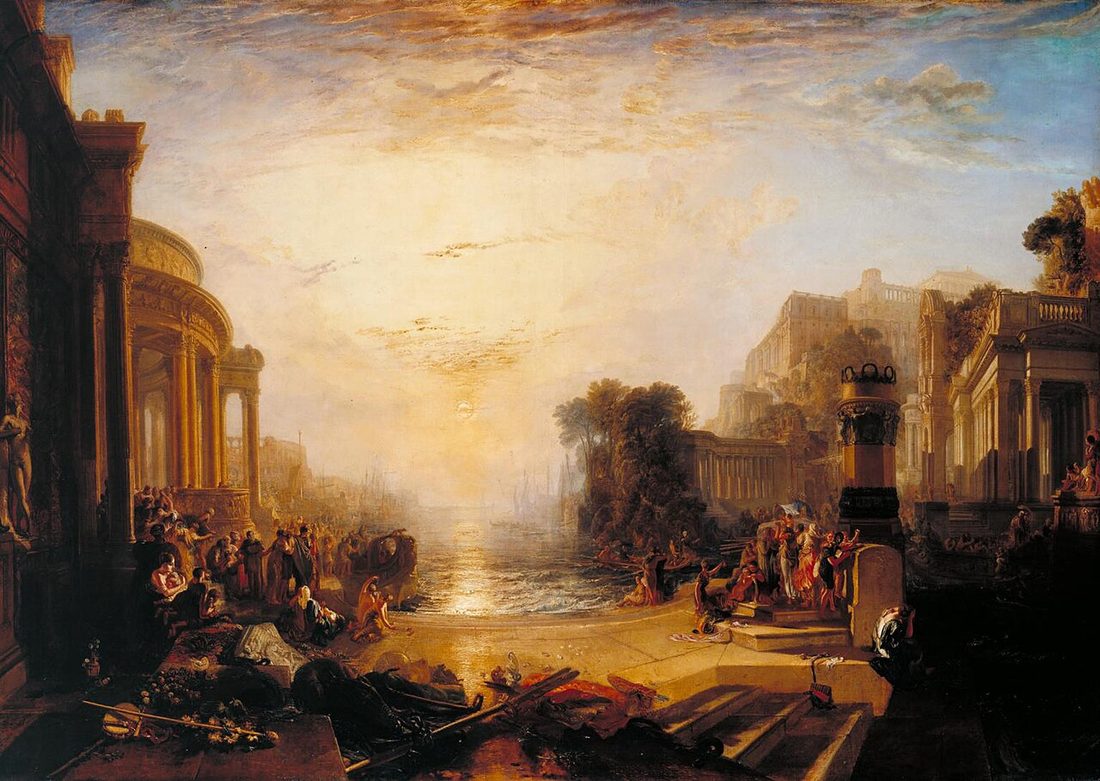
His will was elaborate and repeatedly revised. He wanted his finished paintings kept together and shown to the public, he attached the famous condition that two of his canvases hang beside two Claudes, and he left money towards an almshouse for what he called decayed artists, a charity he had thought about for years.
The document was not well drafted, which is what caused the trouble. Its provisions were unclear in places and legally vulnerable in others, and it attempted several things at once, so the relatives who had barely featured in Turner's life had a genuine opening once he was no longer there to explain his intentions.
The lawsuit
Turner's cousins contested the will, and the case dragged on until a settlement was reached in 1856. The relatives took the money, the charity for decayed artists never happened at all, and the nation received the artworks. That is the outcome that matters here: the pictures stayed together while the philanthropy was lost.
The settlement's wording has been argued over since, particularly about whether the drawings were meant to be included, and the answer affected how they were treated for decades. What is not in doubt is that the public collection exists because the artworks, instead of their cash value, were what the family let go.
Ruskin sorts it out
The material arrived as a single undifferentiated mass, and John Ruskin took on the sorting of it in 1857 and 1858, working through tens of thousands of sheets at the National Gallery and arranging a selection for public display. Much of the early framework for understanding the Bequest is his.
His judgements also determined what stayed in storage, and later curators have had to revisit a number of them, particularly where he suppressed drawings that he personally considered improper. A century of access to Turner was shaped by one critic's decisions about what the public should and should not see.
Where it is now
The Bequest is held by Tate and shown in the Clore Gallery at Tate Britain, purpose-built for it and opened in 1987. Several of the major finished oils went to the National Gallery, including the two Turner required to hang beside Claudes, so the Bequest is split across two institutions instead of one.
Questions
How many works are in the Turner Bequest?
Around thirty-nine thousand separate items in total. Roughly three hundred of them are finished oil paintings and some two thousand are watercolours; the overwhelming remainder is loose drawings and sketchbook pages, including over three hundred intact sketchbooks covering about sixty years of Turner's travel and observation across Britain and the Continent.
Why was Turner's will contested?
It was elaborate, repeatedly revised and poorly drafted, attempting several things at once and unclear or legally vulnerable in places. His cousins challenged it and the case ran until a settlement in 1856: the relatives took the money, the artworks went to the nation, and the almshouse for decayed artists he had wanted was never built.
Where can I see the Bequest?
Tate holds it and shows a rotating selection in the Clore Gallery at Tate Britain, which was built for the purpose and opened in 1987. Works on paper are rotated rather than permanently displayed. Several major finished oils are at the National Gallery instead, including the two Turner required to hang beside Claudes.