Influence · Royal Academy · 1789 onward
Turner and Sir Joshua Reynolds: Royal Academy Theory and Discourses
Turner entered the Academy Schools at fourteen while Reynolds was still President. The theory he absorbed there explains why he spent a career refusing to let landscape be a minor kind of painting.
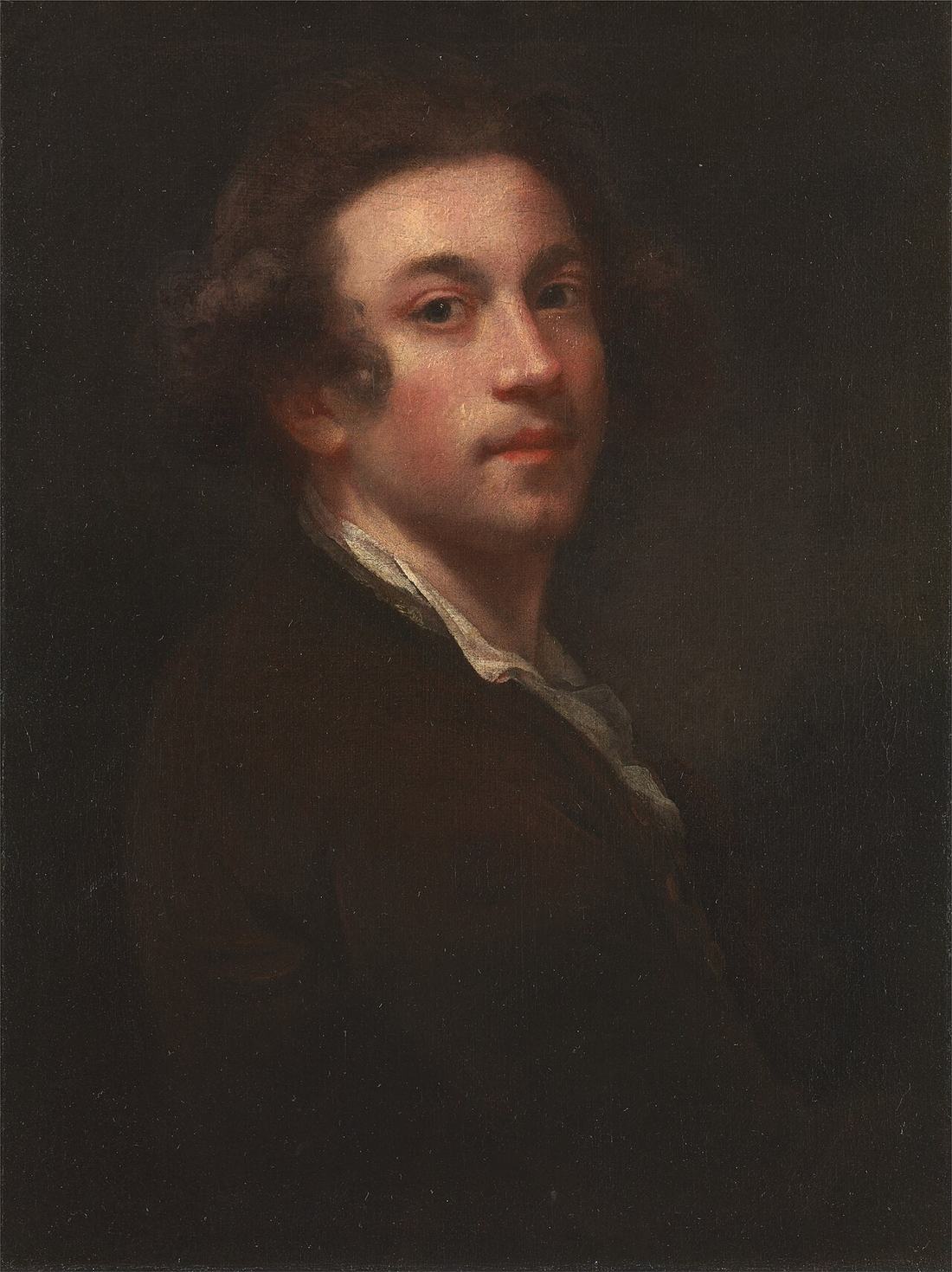

Turner as a student under Sir Joshua Reynolds
Turner was admitted to the Royal Academy Schools in December 1789, at fourteen. Sir Joshua Reynolds had been the Academy's first President since its foundation in 1768 and held the office until shortly before his death in 1792. The overlap was brief, but it placed Turner inside the institution at the moment Reynolds still defined it.
Sir Joshua Reynolds delivered his Discourses to the students as annual addresses, and the Discourses were published and reprinted throughout Turner's lifetime. For an ambitious young painter they were the official statement of what art was for and which kinds of picture counted. Turner read them closely, and the evidence runs through his career.
The Royal Academy hierarchy of genres
Academic theory ranked subjects. History painting, meaning serious narrative drawn from scripture, myth or classical literature, stood at the top. Portraiture came next, then scenes of everyday life, then landscape, and still life last. The ranking was not a matter of taste but of institutional doctrine, and it governed how pictures were priced and reviewed.
A landscape painter of real ambition therefore had a problem, and Turner understood it early. He could accept the lower rung, or he could try to drag landscape upward by loading it with the seriousness reserved for history. Almost everything strategic about his exhibition career follows from choosing the second option.
The Discourses and the Grand Manner
Reynolds argued that the painter should generalise. The artist's task was to find the central form beneath the accidents of a particular face or a particular tree, and to discard what was merely local. Slavish copying of nature produced likeness without dignity, and only the informed selection of what mattered could produce an elevated art.
Turner took the principle and applied it where Reynolds had not expected it. If landscape could be composed rather than transcribed, it could carry weight, and a coastline could be arranged into an argument as readily as a group of figures. His classical subjects are the most literal application, but the habit shaped his topographical work too.
Turner as Royal Academy professor
He was elected an Associate in 1799 and a full Academician in 1802, at twenty-six. In 1807 the Academy appointed him Professor of Perspective, and he delivered his first lectures in 1811. He held the chair for three decades, though he lectured irregularly and by most accounts spoke badly, to rooms that thinned as he went on.
The lectures matter anyway, because preparing them forced him to systematise. He read widely, made elaborate diagrams, and worked through how pictorial space is constructed. The post also kept him at the institutional centre of British art for most of his working life, which was exactly where a painter with his ambitions needed to be.
Where Turner departed
The break comes over particularity. Reynolds distrusted the specific, and Turner spent his life recording it, filling hundreds of sketchbooks with weather, rock formations, rigging and light on water observed on the spot. His late work pushes towards a generality Reynolds might have recognised, but it gets there from an opposite direction.
Turner also honoured the theory while quietly outgrowing it. He went on producing classical subjects long after the market cooled, and he attached verse to his catalogue entries to signal literary standing. At the same time he was making pictures whose real subject was atmosphere, which the hierarchy had no category for at all.
Questions
Did Turner study under Reynolds?
He entered the Royal Academy Schools in December 1789 at the age of fourteen, while Reynolds was still President, and Reynolds held the office until shortly before his death in 1792. The overlap was short and there is no sense in which Turner was a personal pupil, but he was formed inside the institution Reynolds had built and defined.
What is the hierarchy of genres?
It is the academic ranking of subject matter that placed history painting at the top, followed by portraiture, scenes of everyday life, landscape and finally still life. It was institutional doctrine and not private preference, and it shaped how pictures were priced and reviewed, which is why an ambitious landscape painter had to work against it.
What were Reynolds's Discourses?
They were the annual addresses Reynolds delivered to students at the Royal Academy, published and repeatedly reprinted during Turner's lifetime. They set out the doctrine of the Grand Manner, arguing that the painter should generalise towards central forms and not transcribe particulars, and they functioned as the official account of what serious art was for.
Was Turner a professor at the Royal Academy?
Yes. He was appointed Professor of Perspective in 1807 and gave his first lectures in 1811, holding the chair for around thirty years. He lectured irregularly and contemporaries agreed he was a poor speaker, but preparing the material forced him to work systematically through how pictorial space is built, and the post kept him institutionally central.