Theme · Practice · Royal Academy
Turner on Varnishing Days: Finishing Pictures at the Academy
Exhibitors were given days to varnish and adjust their work once it was hung. Turner used them to bring in unfinished canvases and complete them on the wall.
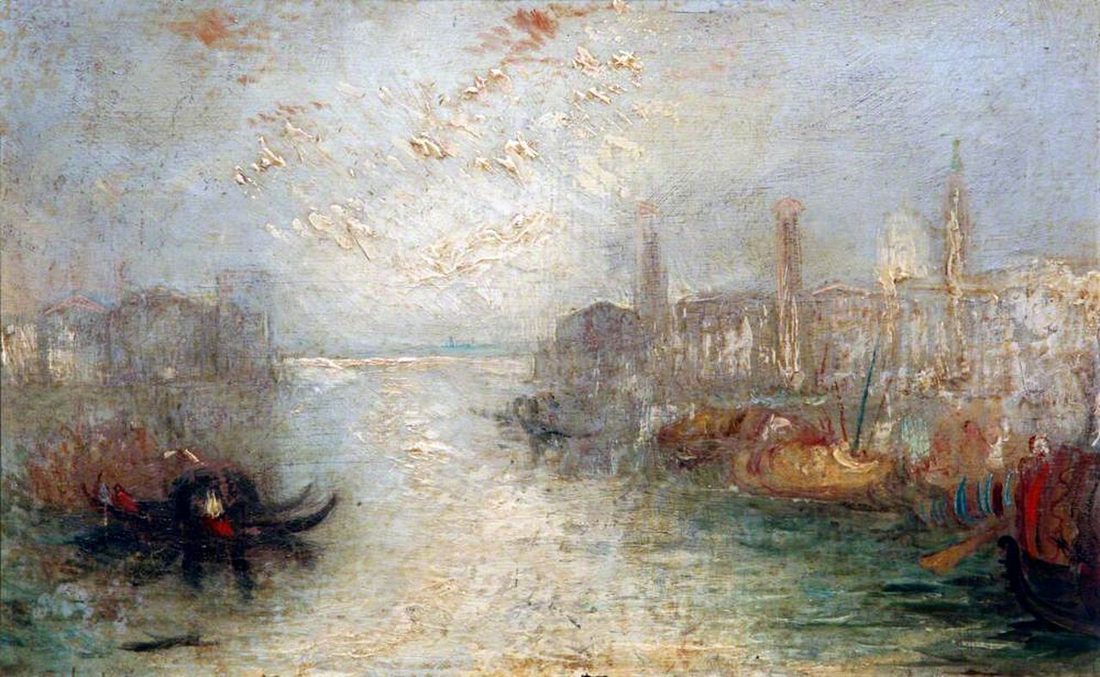
_(after)_-_San_Benedetto_Looking_towards_Fusina_-_LL_3699_-_Lady_Lever_Art_Gallery.jpg)
What the days were for
Once the hanging had been settled, the Academy allowed its exhibitors several days in the rooms to varnish their pictures and to make small adjustments. The intention was tidying up; Turner treated the time as part of his actual working process and arrived with canvases that were nowhere near finished.
Why it was tactical
A painting completed in position could be tuned to the light it had actually been allotted and to the colour of whatever was hanging beside it, which mattered a great deal in rooms hung frame to frame from floor to ceiling. The practice was showmanship and competitive advantage at the same time.
The eyewitness
The painter Edward Villiers Rippingille left a detailed account of watching Turner finish the Cleveland burning-of-Parliament canvas at the British Institution in 1835. He describes him working close up against the surface with small tools, saying almost nothing to anybody, and then leaving the room abruptly without a backward glance.
Questions
Did other painters do the same thing?
They used the days as intended, for varnishing and for small adjustments, and Constable notably brightened his own canvas on one occasion to hold the wall against a Turner hanging beside it. Arriving with a picture that was nowhere near finished, however, was recorded by contemporaries as Turner's own habit.
Was finishing a picture on the wall allowed?
The days were intended for varnishing and for minor adjustment rather than for completing a canvas, so Turner was stretching their purpose rather than actually breaking any rule. Contemporaries recorded it as entirely characteristic of him, and the accounts all describe colleagues gathering to watch instead of objecting to it.