Influence · Predecessor · 1714–1782
Turner and Richard Wilson: The Welsh Painter Who Came First
Wilson applied Italian classical composition to Welsh mountains decades before Turner did. Turner copied his work as a young man and named him in a title.
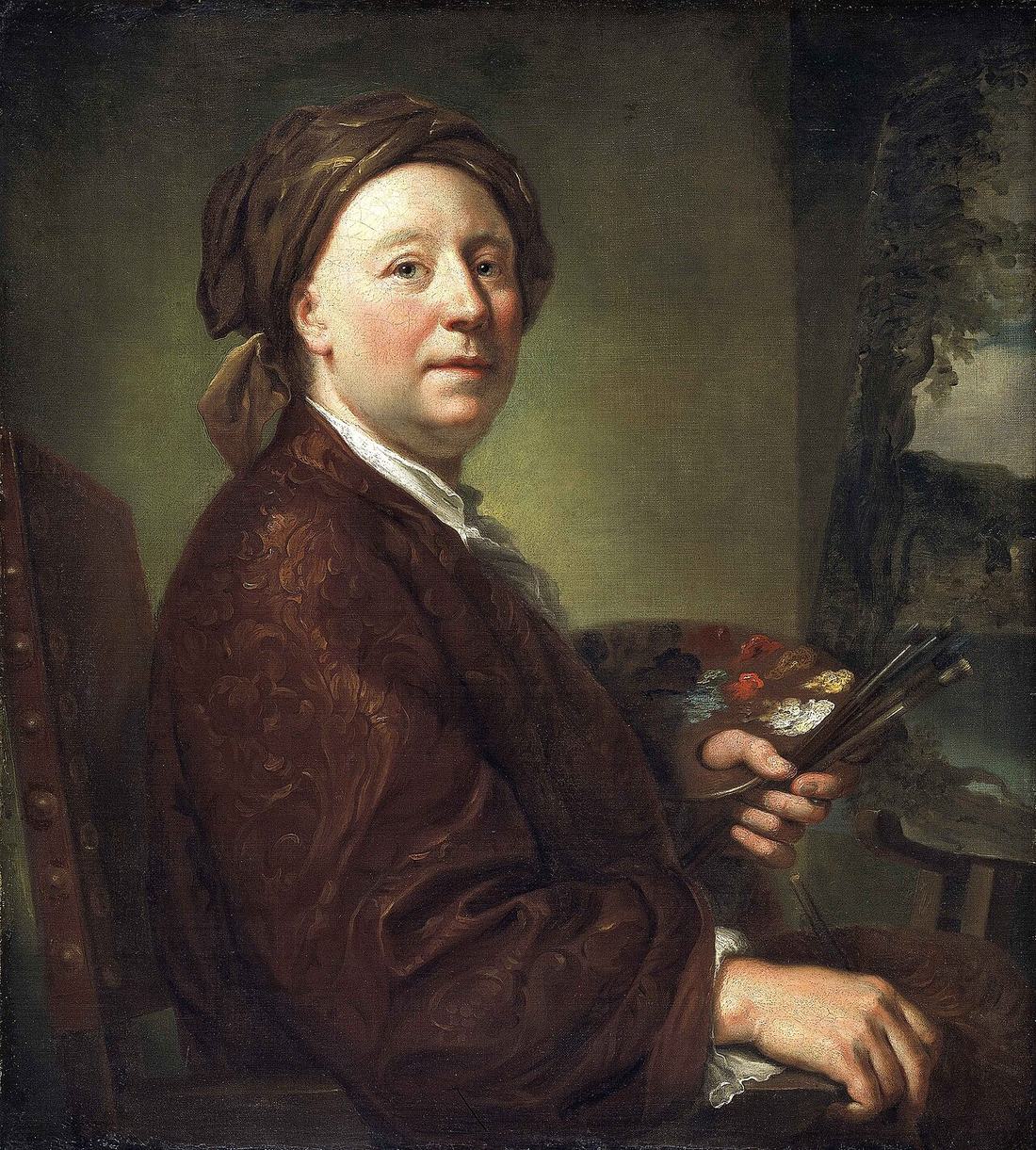

Who Wilson was
A Welsh painter, roughly 1714 to 1782, who worked in Italy during the 1750s and then returned to apply what he had learned there to British and Welsh subjects. He was a founder member of the Royal Academy, and his reputation was already in decline by the time that he died.
What Turner took
The precedent itself. Wilson had already demonstrated that a Welsh mountain could be composed with the gravity of a Roman campagna, which is precisely the move Turner made in the Welsh pictures of 1798 to 1800. Turner also produced copies after Wilson early on, and two of his own early canvases name him.
Questions
Why does Richard Wilson matter to Turner?
Because he had already done the very thing Turner wanted to do. Wilson applied the compositional gravity of Italian classical landscape to Welsh and British subjects a generation earlier, which established that native scenery could carry such treatment at all, and Turner then followed the same route in his Welsh pictures.
Did Turner copy Richard Wilson?
Yes, in the way young painters of the period learned: two early Turner canvases in the Bequest are titled as being after Wilson, and the influence runs through his Welsh subjects of 1798 to 1800. Wilson had already shown that a Welsh mountain could carry the gravity of an Italian classical landscape.